

Boosting the Economy of the Community, UMKT Trained Giri Agung Villagers Producing Detoxifying Jamu and Soap From Natural Ingredients
Author: Ashifa Nabila Putri
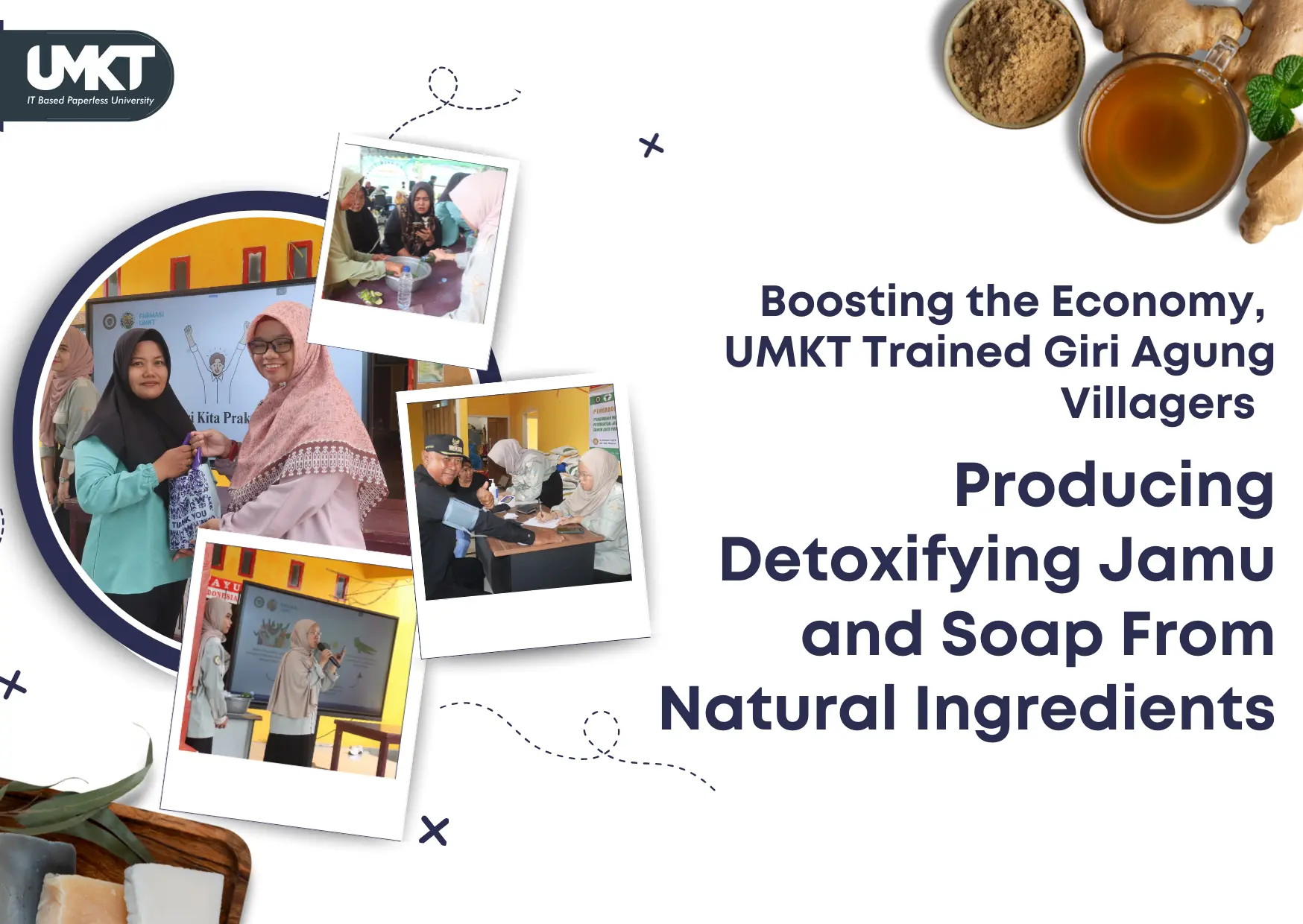
umkt.ac.id, Samarinda - Universitas Muhammadiyah Kalimantan Timur (UMKT) recently conducted a community service program focused on utilizing natural resources to produce detoxifying jamu (traditional herbal medicine) and eco-friendly dish soap. The event took place on October 6, 2024, in Giri Agung Village, Sebulu District, Kutai Kartanegara Regency.
The initiative was led by Deasy Nur Chairin Hanifa, a lecturer in Clinical and Communal Pharmacy, and involved 13 pharmaceutical students. Key outputs from this program include two publication scripts submitted to national journals and the release of a pocket-sized instructional book.
Giri Agung is an agrarian village, with approximately 90 percent of its population heavily reliant on the agricultural sector. This dependency makes the community vulnerable to rice grain price fluctuations and limits the added value they can derive from raw agricultural products. Furthermore, the potential of local MSMEs (Micro, Small, and Medium Enterprises) is currently under-optimized due to a lack of innovation, production skills, business management training, and inadequate marketing networks.
Giri Agung possesses vast potential in leveraging its natural resources, including a wide array of herbal plants and ingredients, which can be transformed into valuable products. This potential justified UMKT's decision to organize the training to bolster community capacity and open up new economic opportunities beyond traditional agriculture.
The community service program featured a series of events, including free medical check-ups and health education, alongside two main practical sessions: producing detoxifying jamu and natural dish soaps.
First, the jamu was crafted from readily available spices and offers numerous health benefits, primarily focusing on detoxification and boosting the immune system. The utilization of local spices also encourages villagers to sustainably source raw materials from nearby plants.
Meanwhile, the dish soap was made using pandan leaves and lime. Lime was chosen for its antioxidant and cleansing properties, while pandan leaves were incorporated to provide a fresh, aromatic hint and act as a natural dye. This combination resulted in a safe, eco-friendly dish soap.
Both products are easy to manufacture and have the potential to be developed into home-industry level enterprises. Additionally, the homemade dish soap serves as a viable, eco-friendly alternative to synthetic detergents that often pose environmental risks.
Through this community service program, UMKT delivered tangible benefits to the Giri Agung village community. Beyond imparting knowledge on natural resource utilization, the program also raised awareness about the importance of using safe and environmentally friendly products.
Economically, the villagers gained the skills to produce natural soaps and jamu as viable micro-enterprise products based on local ingredients. These products can be sold in simple packaging, distributed to local markets, and potentially become commodities managed by the Village-Owned Enterprise (BUMDes - Badan Usaha Milik Desa). Thus, the training not only contributed to community health but also facilitated the village's economic diversification.
Author: Raisha Azzahro
Translator: M. Rafly Raihandy
Designer: Raihana Adhwa