

Research Suggests Students’ Active Social Media Engagement May Improve English Proficiency
Author: Raisha Azzahro
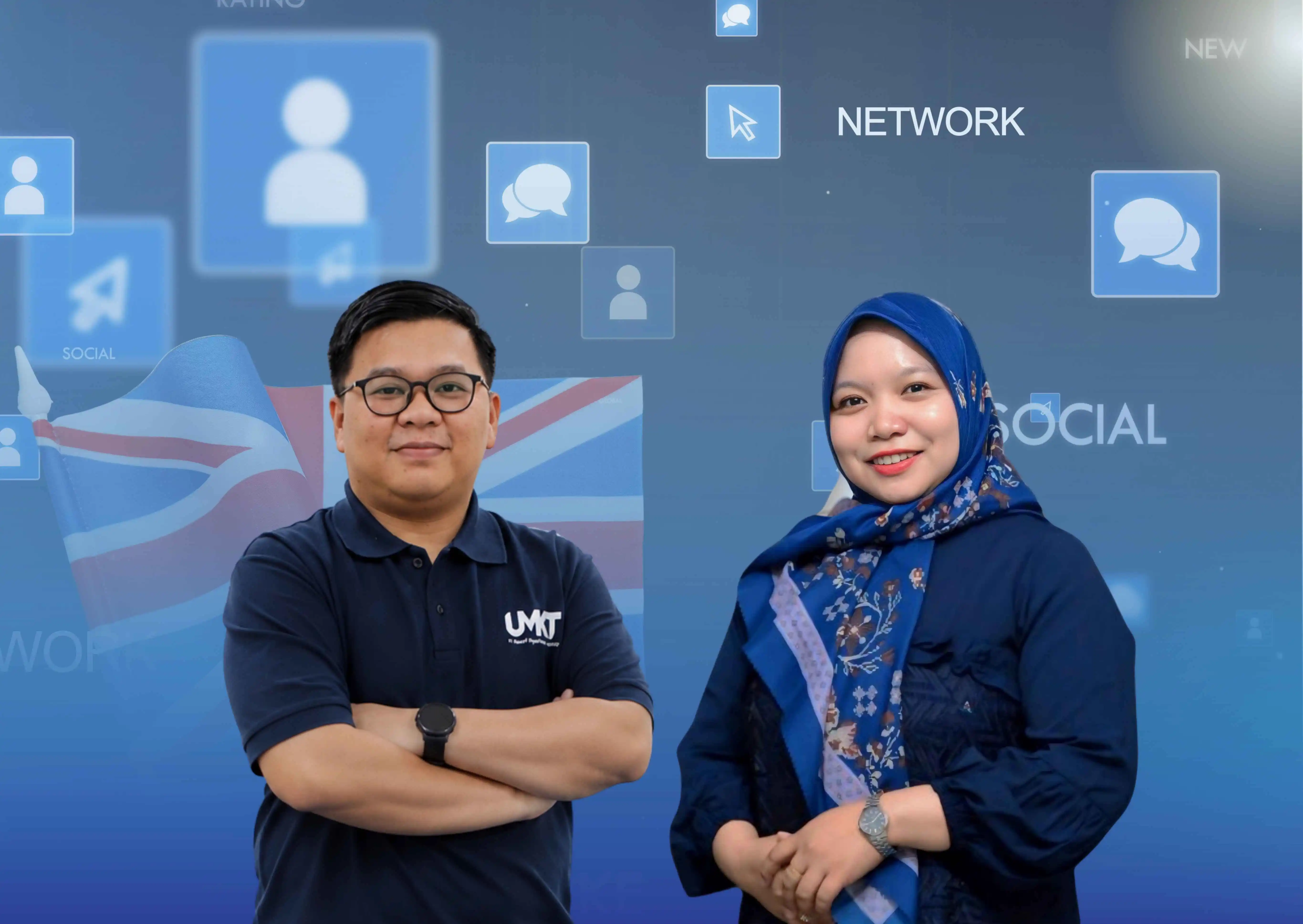
umkt.ac.id, Samarinda – Nowadays, social media is not only a platform for entertainment, but also an effective space for student learning. A study conducted by two English Education faculty members at Universitas Muhammadiyah Kalimantan Timur (UMKT)—Ade Ismail Ramadhan Hamid and Khusnul Khatimah—found that social media use is closely linked to an increase in students’ self-directed English learning.
The quantitative correlational study, titled "Boosting Students' Self-Directed English Learning Through Social Media Engagement," involved 72 UMKT students. Using a 30-item Likert-scale questionnaire, the study measured social media use as an English learning tool, levels of self-directed learning (SDL), comparisons between male and female respondents, and the correlation between these two primary indicators.
The research indicates that students who actively engage with social media for English learning achieved a high mean score of 4.07. Similarly, students’ self-directed learning rate registered a high mean score of 3.77. Popular online platforms, such as YouTube, Instagram, and TikTok, provide students with accessible, engaging, and relevant English learning materials.
Furthermore, the findings reveal that 95.8 percent of respondents agreed that social media is instrumental in developing vocabulary comprehension, while 93.1 percent noted that it makes authentic English content more accessible. Students also reported significant improvements in their listening and reading comprehension. Consequently, the study suggests that social media encourages independent learning and boosts student motivation.
However, the study also highlights that some students face challenges in maintaining learning consistency. Time management and self-evaluation are key areas requiring improvement to ensure smooth self-directed learning. Regarding gender, female students scored slightly higher than male students, but the difference was not statistically significant. This confirms that social media functions effectively as a learning platform for all students, regardless of gender.
Additionally, the study revealed a strong positive correlation between social media use and students’ self-directed learning abilities ($r = 0.793, p < 0.001$). These findings suggest that greater exposure to English content on social media empowers students to set learning goals, locate resources, and continuously refine their English skills independently.
This research provides a solid foundation for integrating social media into higher education English teaching methodologies. Educators can leverage various digital platforms to enrich the learning experience while guiding students on effective time management, screen time balance, self-evaluation, and structured media use.
In conclusion, social media is far more than a communication tool; it is a dynamic learning ecosystem that fosters independent and adaptable learners in the digital age.
Author: Raisha Azzahro
Translator: M. Rafly Raihandy